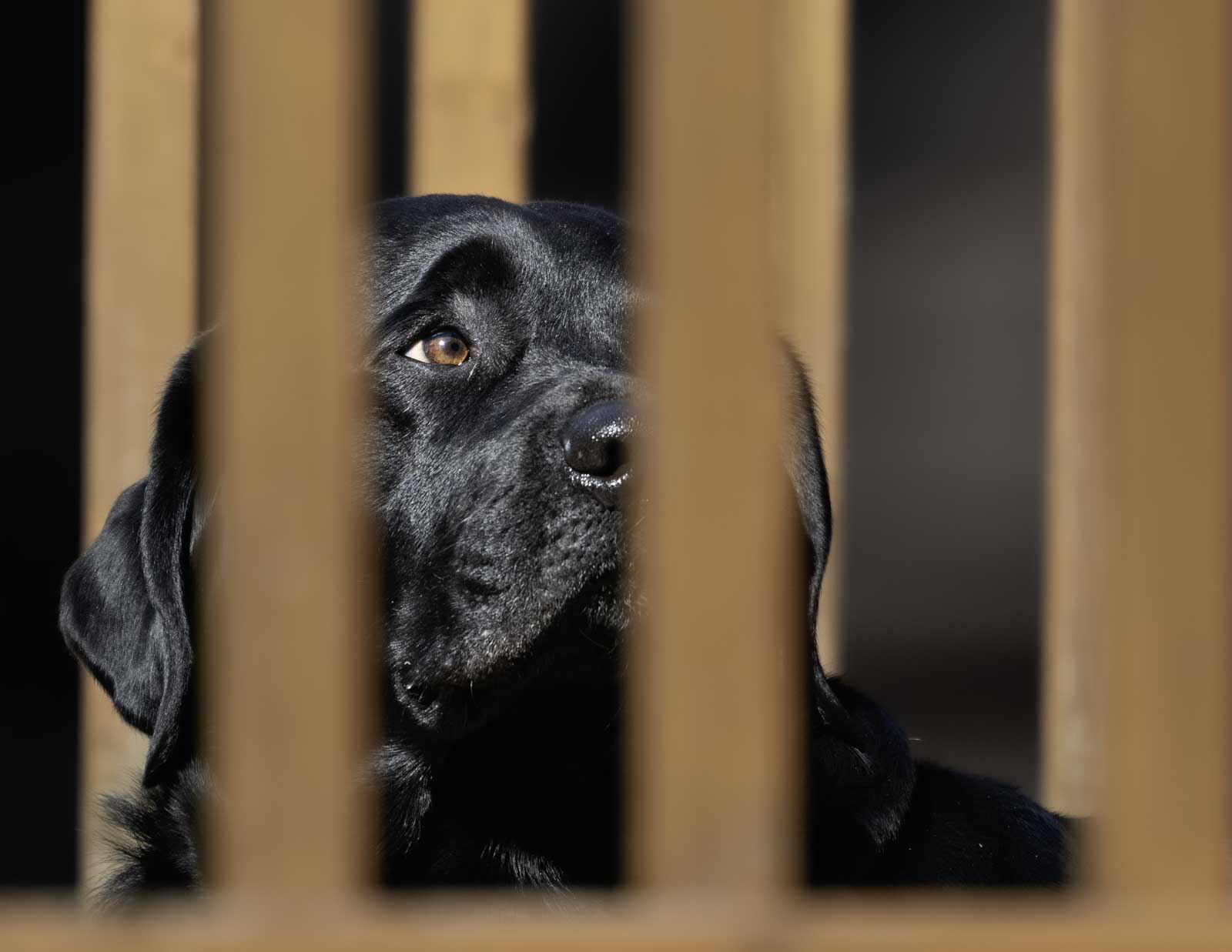
Capturing a dog’s true personality on camera is about more than having the right lens, a great location, or even the perfect light. It’s about knowing what the dog is “saying” through its body language — and adjusting your approach in real time to match its emotional state.
This is where the difference between an average pet photo and a frame-worthy portrait lies. A dog that feels relaxed will show it in every detail… the set of its ears, the way it holds its tail, even the softness in its eyes. A dog that’s anxious, overstimulated, or unsure will also show it… and the camera catches that, too.
As a professional pet photographer in St. Louis, I’ve seen this play out in many situations. Understanding canine body language isn’t a “nice to have” skill. It’s the foundation for getting images that reflect the happy dog you see every day.

Reading the relaxed, happy dog
One of my favorite sessions took place in Lafayette Park with a senior golden retriever named Ellie. She wandered into the park with her head high, tail wagging in a slow, sweeping motion, and ears in a natural forward position. Her body posture was loose, weight evenly balanced, and her facial expressions were soft.
These are all calming signals — signs of a relaxed dog that is open to interaction. In dog photography, that translates into more opportunities for natural, expressive shots. If I’d wanted a dignified close-up of Ellie’s eyes, I could get it without her looking tense. If I wanted to capture a playful moment, she’d oblige without hesitation. That’s a golden for you!
Positive cues to look for:
- Loose body posture — no stiffness, weight evenly balanced.
- Ears forward or in a neutral position.
- Tail wagging slowly at mid-height.
- Soft eye contact without a hard stare.
- Play bow — front legs down, rear up — often an invitation for fun.
- Relaxed mouth with a gentle pant.
When I see these signals, I know I can get closer, experiment with angles, or introduce light movement without causing stress.
A photo of a truly happy dog comes from more than just a wagging tail. It is the combination of posture, expression, and tail position all in perfect balance.
Spotting the signs of stress or overstimulation
Not every dog starts a session feeling ready for the camera. One border collie I photographed at Queeny Park kept yawning during the first 10 minutes. It wasn’t because he was tired, but because he was trying to calm himself in a new environment. His ears were pinned back, tail low, and he avoided direct eye contact.
These signals told me he needed space. Instead of pushing for posed shots, we walked along a quieter trail until his body language shifted. Almost instantly his ears came forward, the tail rose to a neutral position, and his eyes brightened.
Common stress cues to watch for:

- Whale eye — whites of the eyes showing.
- Ears back or flattened.
- Tail tucked or rigid and high.
- Lip licking or yawning when not tired.
- Raised hackles (piloerection).
- Hard stare or tight facial expressions.
These cues show up as tension in the face, stiffness in the entire body, or a lack of engagement. A professional photographer will recognize this instantly. They will make adjustments such as taking a break, changing locations, or giving the dog something fun to do.
How St. Louis environments affect pet body language
Body language isn’t static — it changes depending on what’s happening around the dog. The same dog can look confident on an empty trail and uneasy in a crowded plaza.
- Busy spaces: In Tower Grove Park during the farmers’ market, even a confident dog might avert its gaze or show appeasement behaviors because of the crowd noise, food smells, and other dogs.
- Quiet spaces: Shady corners of Forest Park or the less-traveled trails in Castlewood State Park often bring out more relaxed body language, making it easier to get close-up shots with soft expressions.
- Lighting: Harsh midday sun can make dogs squint, flatten their ears, or turn away. These are often subtle changes that affect both posture and emotional state. Early morning or late afternoon “golden hour” light often produces softer eyes and looser posture.
Recognizing these shifts helps a photographer choose not just the right location, but the right moment within that location.
Photography decisions guided by body language
The point of reading canine communication isn’t just to understand how the dog feels. It’s to use that understanding to make better creative choices. Here are some real-world examples from St. Louis shoots:
- Distance: A nervous rescue mix at Carondelet Park wouldn’t make eye contact when I stood close. Switching to a long lens let me capture his expressions without being in his space.
- Movement breaks: A high-energy lab in Forest Park was fixated on every squirrel in sight. Between shots, we played quick fetch games to burn off excitement so his body posture settled for portraits.
- Background control: A timid beagle in Tower Grove was spooked by bikes whizzing past. Moving 50 feet to a tree-lined area where bikes weren’t allowed immediately changed her ear position and tail height.
These adjustments come from pairing technical skill with behavioral awareness. The goal isn’t just a well-exposed image. It’s one where the entire body reflects the dog’s true emotional state.
Choosing a photographer who understands dogs
In St. Louis, you’ll find plenty of photographers who can take technically good images. But getting special images – those you’ll hang in your home – requires understanding and responding to its behaviors. A wagging tail is easy. What about changes in ear position? A lack of eye contact?
When I meet a dog, I’m already scanning for its baseline emotional state:
- How does it carry its tail when relaxed?
- Where do its ears naturally rest?
- How does it respond to my eye contact?
From there, the shoot becomes a conversation, not with words, but with posture, expressions, and movement. A relaxed dog makes the experience more enjoyable for the dog, the owner, and the photographer.
Click if you are Interested in more depth around why you should hire a professional pet photographer in St. Louis.
And, to reinforce our experience with understanding things that move quickly in nature, see our galleries for Bald Eagles, Owls, and Horses.
Bringing it all together
Understanding dog body language is part science, part art, and all about connection. The best photographs come from a happy, relaxed dog.
If you want a session where your dog’s personality shines — ears forward, eyes bright, tail wagging at just the right height — let’s plan something in one of many dog-friendly parks in St. Louis.

Todd Gurley: Better Late Than Never
Todd Gurley is a photographer who has come to the professional party late, but has had a big boy camera since he was 14.
Todd’s love of photography always had an outdoor focus. It started with sports, evolved to landscape, and then wildlife and birds.
And now pets!.
Based in St. Louis, Missouri, but an Arkansan at heart, Todd lives with his partner in crime of 50 years Sheila and about 250 pounds of dogs. They have two golden retrievers named Gracie and Ellie and one black lab named Norman. And bringing up the rear is an additional 10 pounds from Sally the rescue cat. She’s in charge if you are wondering.
Todd has this other business with his son Drew called Redbird Advisors. Oh, and he now has this website which was first discussed 25 years ago.
No wine before its time!
P.S. The photo above was taken on our way to the summit of Mt. Quandary, a 14,271-foot peak in the middle range of the Rockies, south of Breckenridge. Colorado. There are 58 named “14ers” in Colorado, the most of any state.
You must be logged in to post a comment.