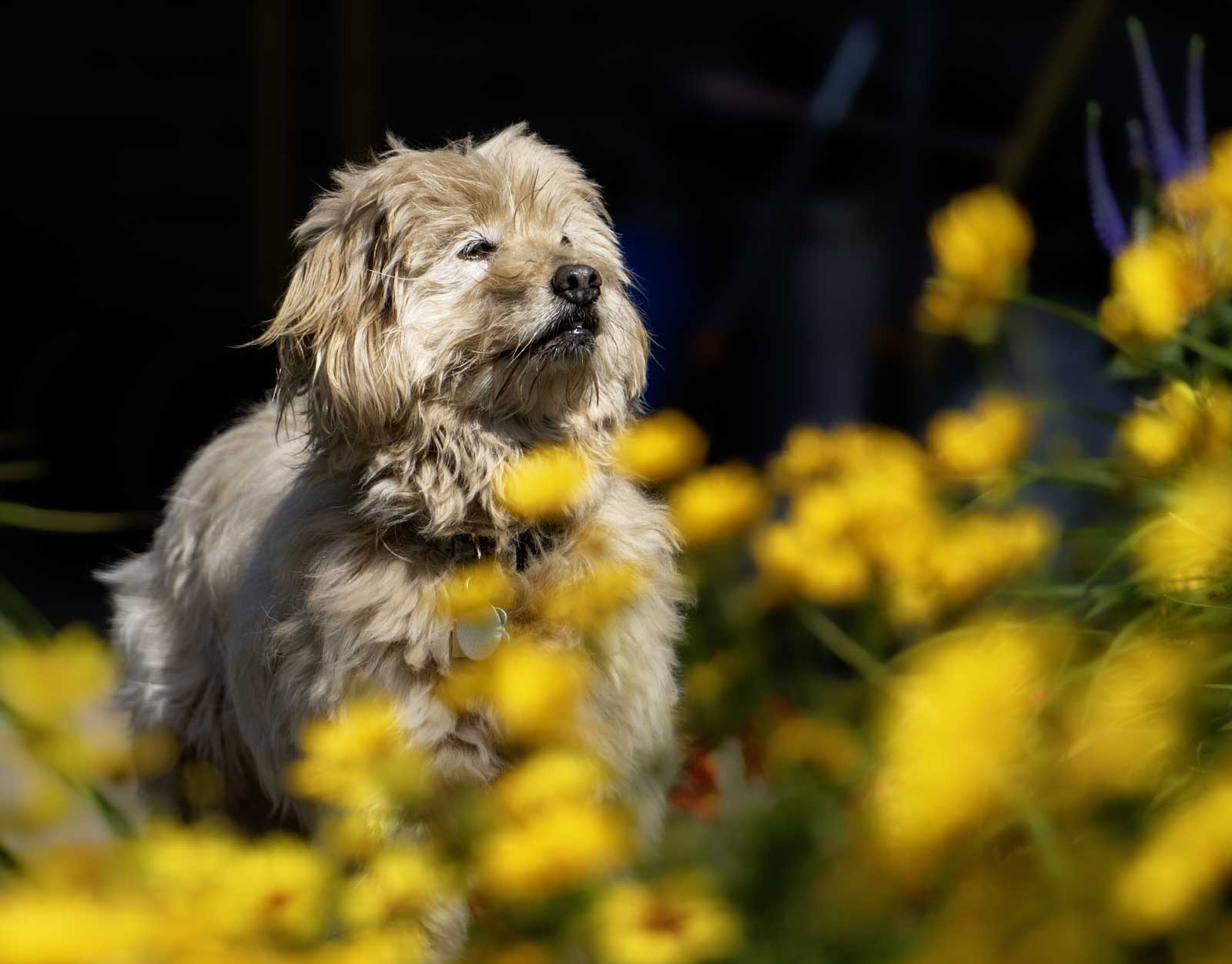

Nothing beats being outdoors when it comes to dog photography. And we have some great tips to make your photoshoot go perfectly.
With all its advantages, an outdoor dog photoshoot brings unexpected elements you can’t always predict or control. Preparation is key to ensure your dog is comfortable and well behaved during the photoshoot. This allows the photographer to focus on taking spectacular photographs, not managing your dog!
With preparation, you can create a fun and memorable experience that results in beautiful, candid photos of your beloved dog.
Let’s dig in (no pun intended).
1. What is the right outdoor location in St. Louis and Northwest Arkansas to photograph my dog?
Of all the tips for dog photography, finding a prime outdoor location ranks high on the list. There are two critical components when deciding where to have your outdoor pet photo session:
- A setting where your dog feels at ease and secure
- A location that allows the photographer to capture stunning shots
The second component won’t be as likely to happen if the first has not been accomplished.
Let’s address what’s in your dog’s best interest first. The best shots often happen at home, where dogs feel the most relaxed and confident. Weather aside, you also have the most control over the environment. But is it the right place for professional-quality photos? We will get into that in tip #6.
Also, consider the visual backdrop that will complement your dog’s coat and personality. For instance, the bright colors of spring flowers can make a playful dog’s energy pop, especially one with a lighter coat. The muted tones of a fall forest backdrop are perfect for more reserved dogs of just about any color. Each location brings a different mood to the session.
The bottom line: choose a place where your dog’s personality can shine. A high-energy dog will thrive in a spacious park, while a reserved dog may feel more comfortable in a quieter, shaded area. Also, consider accessibility and amenities like shade, water sources, and rest areas.
Here is a good list of dog-friendly parks in St. Louis. And here are our favorite parks in Northwest Arkansas.
We have expanded to Northwest Arkansas
We are focused on Benton and Washington counties, with the cities of Fayetteville, Springdale, Rogers and Bentonville. Here is a detailed, comprehensive list of dog-friendly parks and locations in Northwest Arkansas. You can learn more here about our services in Northwest Arkansas.
Now for the pet photographer (whether that is you or a pro you hire). One of the most valuable tips for dog photography is timing. The best photos come with great outdoor lighting. See our tips in one of our favorite articles, Taking advantage of natural light for pet photography in St. Louis and Northwest Arkansas.
A stunning photoshoot is on tap if you collaborate with your photographer and select a location with optimal natural light.

2. What gear and accessories will make for a successful outdoor dog photography photoshoot?
The dog owner and the photographer both play a role in ensuring a smooth photoshoot. The goal of both are great shots.
A secure and comfortable harness is recommended if the pet is taken to an unfamiliar location. A harness offers better control than a collar and helps keep your dog at ease. Bring a portable water bowl to keep your furry friends hydrated throughout the session—and don’t forget water for yourself!
One of the most underrated tips for dog photography and dog portraits in St. Louis is bringing a mix of high-value treats and favorite toys. Treats can be used as rewards for good behavior and to encourage your dog to pose or follow commands. Favorite toys can also serve as props or be used to capture playful, candid moments.
Let’s not forget the dog photographer. If that is you, consider investing in a DSLR or mirrorless camera with fast autofocus and excellent shutter speed burst mode (frames per second). Brands like Nikon, Canon, and Sony offer great options. A versatile zoom lens (such as a 70-200mm for action shots) and a prime lens (like 50mm or 85mm for portraits) can help capture a range of moments. See our recommendations for camera features you need for great dog action shots.
If you hire a professional photographer, ask about their gear and experience with outdoor pet photography. A pro with the right equipment and know-how will capture movement, emotion, and expression in ways that a phone camera can’t match. Read more about how a professional pet photographer takes great action photos.
3. How important is grooming my dog for the photoshoot?
A clean and well-groomed dog is often a happy dog, and your chances of a successful shoot go way up.
A bath a day or two before the photoshoot will allow your best friend’s coat to regain its natural texture. Use a gentle dog shampoo to clean their fur. Then follow up with a conditioner to keep the coat smooth. Brushing your dog’s fur regularly in the days leading up to the shoot will help reduce shedding and prevent tangles. And dogs, especially those with longer fur, hate tangles!
Trimming nails is another often overlooked detail. Overgrown nails can be uncomfortable, especially on hard surfaces, making your dog fidgety during the shoot. Consider having a professional groomer handle it to minimize stress.
Additionally, clean your dog’s eyes, ears, and teeth for a polished look in close-up shots. A subtle collar or bandanna in a complementary color can add a stylish touch.
Trimming your dog’s nails is another good idea as long nails can be uncomfortable. Consider having a professional groomer handle it to avoid any stress or discomfort.
Additionally, clean your dog’s ears and teeth to ensure those close-up shots are perfect.
4. Is the golden hour the best time for pet photography?

Timing is everything in outdoor dog photography.
The “golden hour” is not just good light, it is great light. This time occurs shortly after sunrise and just before sunset, offers soft, warm light with beautiful color tones. This natural glow enhances fur texture and adds depth to your photos. Think of those breathtaking sunset images—golden hour light works similarly for pet portraits. The effect can be magical. Read more about why natural light reigns supreme in outdoor pet photography.
However, golden hour is brief, so arrive early to let your dog settle in before shooting begins.
Cloudy days can offer a great alternative to golden hour. The overcast sky acts as a natural diffuser, softening the light and reducing harsh shadows. This creates a more even lighting that’s perfect for pet portraits, especially for photos of dogs with lighter-colored coats. The photo of Ellie the golden retriever was taken on a cloudy (and snowy) day. However, the soft, diffused light still captured her expressive face and movement.
What about midday? When the sun is directly overhead, it creates harsh shadows that can obscure your dog’s facial features. Additionally, bright sunlight can cause squinting and discomfort. If a midday shoot is unavoidable, look for open shade under trees or buildings to diffuse the light.
Communicate with your photographer about lighting concerns based on your chosen location. Open fields, wooded areas, and waterfront settings all have different lighting conditions, so planning ahead prevents surprises.
5. How should I prepare on the day of the photo shoot?
Arriving early allows your dog to acclimate to the environment, reducing anxiety and increasing comfort. Take your dog for a short walk around the area to familiarize it with the surroundings.
Choose a spot with good natural light and a pleasing, clutter-free background. Remove distractions or obstacles to keep focus on your dog. It’s doubly important to secure the area if your dog will be off leash.
If your dog has anxiety or tends to shy away from new environments, our best advice is to stay calm. Bringing familiar items like a favorite blanket or toy can help them relax.
This is the time to discuss with the photographer specific poses or action shots you want. The more you tell us what’s important to you the better we will be.

6. How can I take a great photo of my dog?
If you are planning to be the photographer for the shoot (and are not a professional), here are some shooting tips that will greatly improve your chances of success:
- The eyes have it. Great wildlife photography, pets or otherwise, starts with the dog’s eyes. The right camera equipment will allow you to get sharp focus on your pet’s eyes and the best chance at the perfect shot.
- Get down to the pet’s level. Photographing dogs is a learned skill. Shooting at eye level is ideal, whether it is an action shot or pet portraits. That means you might get a little dirty, but the results will be fantastic.
- Use light creatively. If you’re in the woods, look for areas where light shines through. Capturing your dog’s face in a ray of sunlight in the woods can be magical.
- Don’t be afraid of the shade. A soft, diffused light with little to no shadows can offer a great source to highlight your dog’s features.
- The right equipment matters. Camera phones today are amazing, but have their limits. Consider investing in a higher-quality camera if your goal is to get action shots. I shoot with one of the greatest cameras for action photography in the world: Nikon Z9.
- Be ready. Don’t let your guard down, because that is invariably when your pet will do something amazing. Your eyes may see it but if your camera is at your waist, you won’t get the shot.
- Learn how to whistle. It works on dogs almost every time. When their head is buried in a gopher hole, a quick whistle can get them back in the game.
Bonus pet photography tips: Bring a friend or family member to help. A second set of hands always comes in handy at pet photoshoots. And, just like at home, use treats, toys or familiar cues to keep your dog focused.
7. How do I handle challenges with my dog during the photoshoot?
Dogs can be easily distracted by new sights, sounds or smells. Stay calm and patient, offering reassurance and positive reinforcement to redirect their attention.
Take breaks as needed to prevent your dog from becoming overwhelmed or fatigued. Keep a sense of humor and embrace the spontaneity of the moment. Some of the best photos often capture unexpected gestures or expressions.
Conclusion: Planning and patience = great photographs
These are our seven best tips for dog photography. They all require preparation. For beginners and experienced photographers alike, our Ultimate Guide to Dog Photography in St. Louis provides more tips and ideas. And check out our in-depth article on hiring a professional for dog photography.
Our range of wild and not-so-wild photography is broad and includes: dogs, birds in flight, moose and wild horses.
Here is how you find out more about our St. Louis pet photography services. And for our friends in Arkansas, click on our Northwest Arkansas pet and dog photography services. Our Platinum Package is the most popular.
If you have questions simply click below to send us a form. Or, if you can’t wait, give us a call at 970-390-9699 (text or phone).

Todd Gurley: Better Late Than Never
Todd Gurley is a photographer who has come to the professional party late, but has had a big boy camera since he was 14.
Todd’s love of photography always had an outdoor focus. It started with sports, evolved to landscape, and then wildlife and birds.
And now pets!.
Based in St. Louis, Missouri, but an Arkansan at heart, Todd lives with his partner in crime of 50 years Sheila and about 250 pounds of dogs. They have two golden retrievers named Gracie and Ellie and one black lab named Norman. And bringing up the rear is an additional 10 pounds from Sally the rescue cat. She’s in charge if you are wondering.
Todd has this other business with his son Drew called Redbird Advisors. Oh, and he now has this website which was first discussed 25 years ago.
No wine before its time!
P.S. The photo above was taken on our way to the summit of Mt. Quandary, a 14,271-foot peak in the middle range of the Rockies, south of Breckenridge. Colorado. There are 58 named “14ers” in Colorado, the most of any state.
You must be logged in to post a comment.