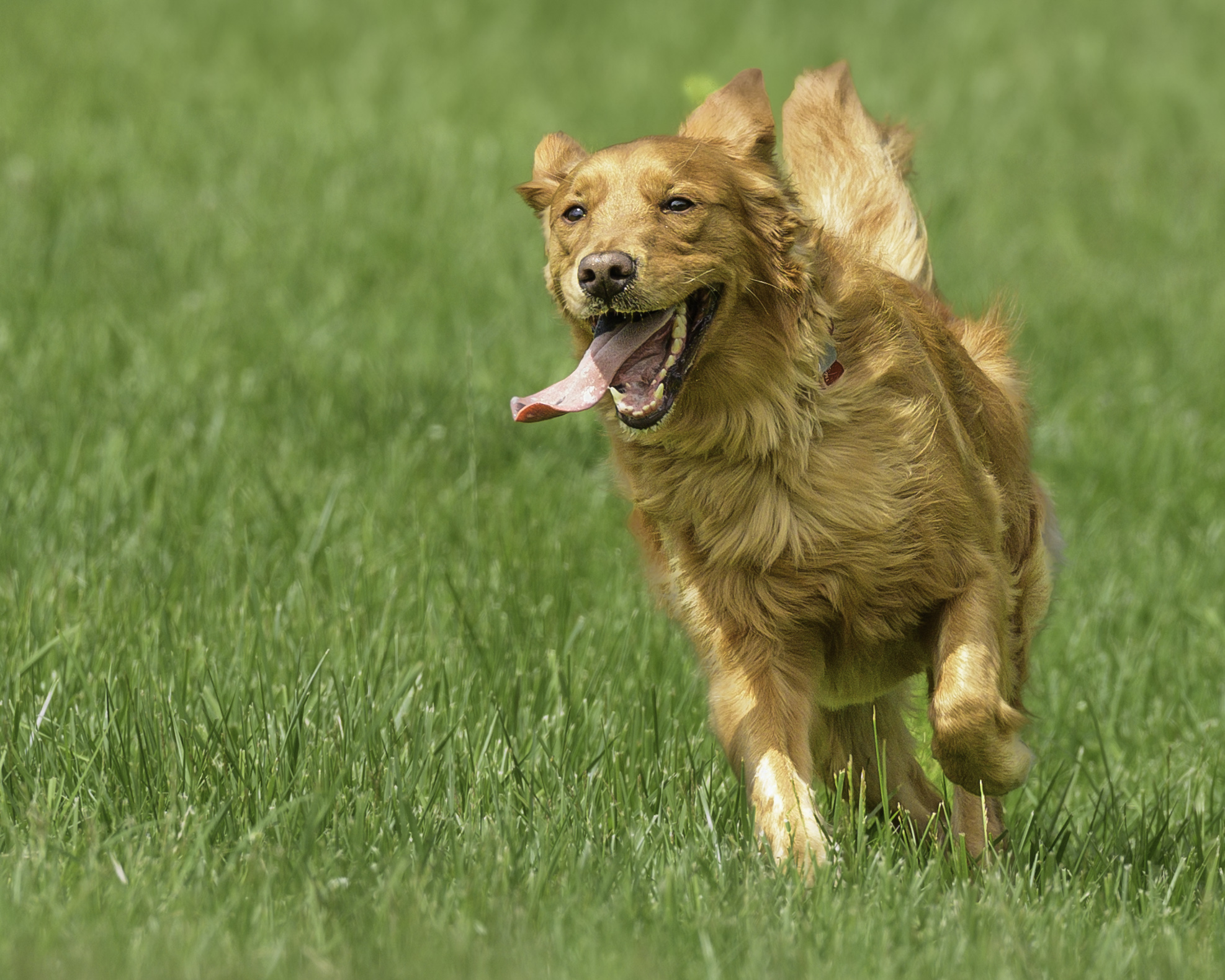
Most dog owners have watched their dogs suddenly explode into motion.
Maybe it happens when a squirrel crosses the yard. Maybe it is during an off-leash romp when a perfectly ordinary dog abruptly becomes a four-legged rocket. For a few seconds, everything else disappears. Ears go back, legs stretch out and the dog seems completely absorbed in the joy of running.
Fast CAT gives dogs a place to do exactly that.
Fast CAT, sometimes called the Fast Coursing Ability Test, is an American Kennel Club sport in which dogs race one at a time along a straight course while chasing a moving lure. Each run is timed, and the result is converted into miles per hour.
The race itself is over quickly. The experience surrounding it is considerably larger.

A Simple Idea That Lets Dogs Be Dogs
Part of the appeal of Fast CAT is that the basic idea is easy to understand. It is a timed 100-yard dash along a straight course. One person releases the dog at the start line, the lure begins moving and the dog races toward the finish line, where another person is waiting to catch it.
Unlike agility, the dog does not need to navigate jumps, tunnels or other obstacles. There is no complicated routine for the dog and owner to perform together. Fast CAT draws on a dog’s natural instincts, particularly its prey drive and desire to chase something moving.
That simplicity creates something wonderful to watch.
Some dogs immediately understand what they are supposed to do. They lock onto the lure and charge down the 100-yard course at full speed. Others need a moment to figure it out. A dog may start cautiously, become distracted or decide that reaching the familiar person waiting at the other end is more important than chasing the lure.
The fastest run is not necessarily the most memorable one.
The sport allows owners to see a side of their dogs that may not emerge during an ordinary walk or afternoon in the backyard. The intensity, concentration and physical ability can be surprising, even for people who know their dogs extremely well.
Fast CAT Welcomes All Breeds
A sport based on running may bring greyhounds, whippets and other dogs associated with lure coursing to mind. They certainly look at home on the course, but Fast CAT is open to all breeds.
Retrievers, terriers, herding breeds, working dogs, small companion dogs and mixed-breed dogs can all participate. Dogs must be at least 12 months old and meet the AKC eligibility requirements.
Purebred dogs may participate through AKC registration or another eligible listing program. Dogs recorded through the Foundation Stock Service, commonly known as FSS, may also be eligible. A mixed breed can participate through AKC Canine Partners, which gives mixed-breed dogs access to a variety of AKC dog sports.
In other words, a dog does not necessarily need to be traditionally AKC registered to participate. Owners should review the available AKC registration and listing options before entering an event.
The variety of dogs is part of the fun. A small dog racing with complete determination can generate every bit as much excitement as a larger dog streaking down the course at an impressive speed.
How Speed Becomes Points and Titles
After each run, the dog’s time is converted into miles per hour. A size handicap based on the dog’s height is then applied to determine the number of points earned.
Dogs measuring 18 inches or taller at the withers receive a handicap of 1.0. Dogs from 12 inches to under 18 inches receive a 1.5 handicap, while dogs under 12 inches receive a 2.0 handicap. This allows dogs of different sizes to earn points toward the same series of AKC titles.
The first title, BCAT, is awarded when a dog accumulates 150 points. A dog reaching 500 points earns the DCAT title, while 1,000 points earns the FCAT title. These are official AKC title designations rather than abbreviations for longer title names. Once earned, the letters can appear after the dog’s registered name.
The progression does not end at 1,000 points. A dog earns FCAT2 after accumulating an additional 500 points, followed by FCAT3 after another 500 points. The number continues to increase as more points are earned.
These AKC titles give owners something to pursue over multiple events. They also allow a dog to build a record through consistent participation rather than the result of a single race.
Official Races and Fun Runs
Some clubs may offer fun runs that give dogs an opportunity to try chasing the lure without entering an official competition. These can be useful for owners who are curious about the sport but do not know how their dog will react.
Requirements and availability for fun runs vary by event. A practice run may resemble an official race, but it generally does not count toward BCAT, DCAT or FCAT points. Owners should check with the host club to learn whether fun runs will be offered and whether advance registration is required.
Trying a fun run may also help an owner discover which dog sports appeal most to a particular dog. One dog may love running at full speed, while another may be more interested in agility, scent work or another activity. The best choice is not always determined by breed. It often comes down to the individual dog’s personality and interests.

Much More Happens Than the Race Itself
A Fast CAT run may last only a few seconds, but an event is filled with moments that never appear on the clock.
There is the anticipation as a dog waits for its turn. Some dogs appear calm. Others have already decided exactly what is about to happen and can barely contain themselves.
There is the owner preparing the dog at the start line and another familiar person waiting beyond the finish line. There are volunteers keeping the event moving, dogs and people meeting between runs, and families reacting when they learn just how fast their dog traveled.
Then there is the dog immediately after the race. Some finish looking triumphant. Some seem ready to turn around and do it again. Others return to their families as though they have just completed the most important assignment of their lives.
Those moments help explain the appeal of dog sports. Whether the activity is racing, scent work or agility, the event gives dogs and their people something to experience together.
The Clubs and Volunteers Behind the Course
Fast CAT is an AKC sport, but individual events are generally conducted by AKC member or licensed clubs. The host club and its volunteers create and operate the course, manage entries, inspect dogs, run the lure, record times and help participants move safely through the event.
A successful race may look simple from the spectator area. Behind it is a group of people coordinating the details that allow each dog to have its moment.
That community matters. Dog sports bring together people with different breeds, backgrounds and levels of experience, but with one obvious interest in common. They enjoy doing something with their dogs rather than merely watching from the sidelines.
A Different Kind of Family Story
A dog running at full speed, completely focused on the lure, is an extraordinary sight. But the racing action is only one part of the story.
The complete experience includes the waiting, preparation, release, family reaction and reunion after the run. It includes serious competitors pursuing another FCAT title and first-time participants who simply want to discover what their dogs will do.
Some of the most meaningful moments may occur when no one is racing at all, which is why hiring a professional family and pet photographer is a way to capture those amazing memories.
Fast CAT may be designed to answer a straightforward question: How fast can your dog run?
Spend time around the sport, however, and it promises to answer another question as well:
What does your dog look like when given the chance to do something it absolutely loves?
You must be logged in to post a comment.